
Table of Contents
Most tourists go to Marrakech’s souks and leave thinking they’ve seen a Moroccan market. They haven’t. Not really. The Amizmiz souk is something else entirely — and it only happens once a week.
Every Tuesday morning, Amizmiz becomes a different town. Farmers come down from mountain villages carrying what they grew, what they made, what they raised. Merchants come up from Marrakech with everything the mountains can’t produce. For a few hours, the whole economy of the High Atlas plays out in one square kilometre. I’ve watched this happen hundreds of times. It still gets me.
What the Amizmiz Souk Actually Looks Like
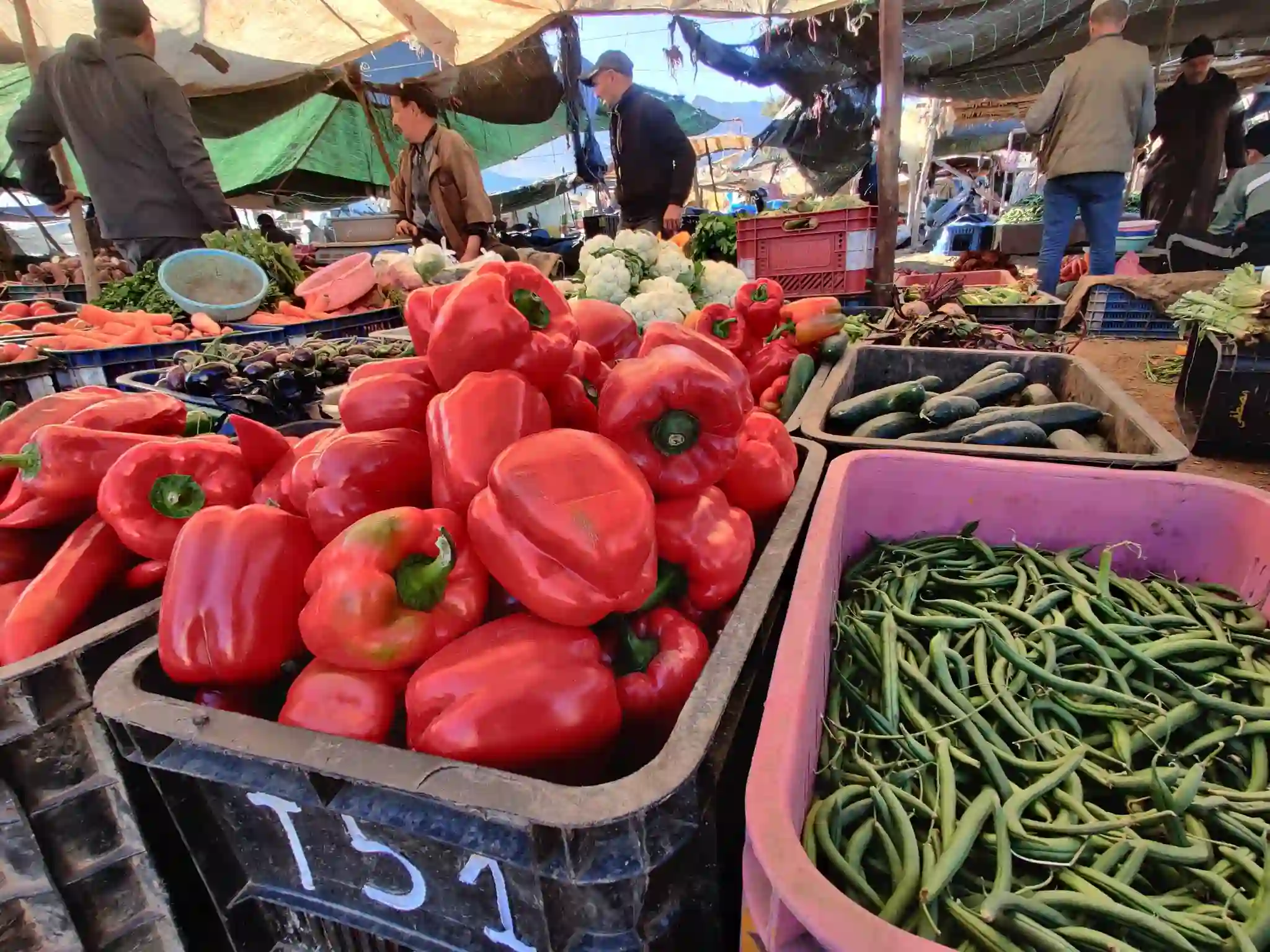
Every Tuesday, hundreds of small farmers descend on Amizmiz from nearby mountain villages, bringing whatever fruits, vegetables, grains, or livestock they are ready to sell. Visit Amizmiz That sentence sounds simple. The reality is not.
You arrive and the first thing that hits you is the sound. Donkeys. Haggling in Tachelhit (the local Berber language). Vendors calling out prices. Then the smell — fresh coriander, cumin, leather, woodsmoke from the mechoui stalls.
The market divides itself by section without anyone telling it to. Produce on one side: pyramids of tomatoes, bunches of mint so fresh they’re still damp, live chickens in wire cages, sacks of dried figs. Then the craft section: hand-woven rugs in rust and indigo, Berber babouches (shoes) in every size, clay tagines still dusty from the kiln, wooden spoons carved from argan wood.
Walk further and you find the livestock area. Goats, sheep, mules changing hands between men who’ve known each other for decades. This part of the market is not for show. It’s not Instagram. It’s how families here make a living.
Nothing has a set price (except fresh food and produce), so be prepared to haggle over prices. This is where I come in. As your guide, I’ll teach you basic Darija phrases for bargaining — b’shal hada? (how much is this?), ghali bezaf (too expensive), wakha (okay, deal). By the end of the morning, you’ll be bargaining yourself. Not perfectly. But genuinely.
We also do tastings. Argan oil pressed that week. Honey from Atlas beehives. Msemen (Moroccan flatbread) from a stall that’s been in the same spot for twenty years. You don’t need to buy anything. But you’ll want to.
The Amizmiz souk remains one of the most sprawling in all the High Atlas and unlike the tourist souks of Marrakech, this one isn’t performing for you. It exists because it has to. That’s the difference you feel the moment you walk in.
What’s Included in the Souk Tour
- Guided tour of all market sections with local context and stories
- Bargaining coaching and key Darija phrases
- Food and spice tastings at trusted stalls
- Introduction to local vendors (some of whom Hassan has known for years)
- Transfer from Marrakech and back (private, door-to-door)
- Optional add-on: Berber family lunch in a nearby village after the market
What’s not included: whatever you buy. Budget 100–300 MAD if you want to pick something up. A good rug will cost more. A bag of spices costs almost nothing.
Pricing
| Experience | Price |
|---|---|
| Souk tour — solo | [750] MAD per person |
| Souk tour — group (2–6) | [500] MAD per person |
| Souk + Berber village lunch — solo | [950] MAD per person |
| Souk + Berber village lunch — group (2–6) | [800] MAD per person |
Prices include private transport from Marrakech. Contact Hassan to confirm current rates.
Practical Tips
- When to go: Tuesday only. The market runs from roughly 8:00 AM to 1:00 PM. Arrive by 9:00 AM to catch peak activity before the heat builds.
- What to wear: Dress modestly — shoulders and knees covered. Comfortable walking shoes. A hat. Sunscreen, even in winter.
- What to bring: A small backpack, cash in MAD (no cards accepted at market stalls), a reusable bag if you plan to buy produce.
- Where to meet: Hassan picks you up directly from your Marrakech riad or hotel. Amizmiz is 60km south — about 1 hour by private car.
- How to book: DM @visit_amizmiz on Instagram or go to visitamizmiz.com. Book at least 48 hours in advance, especially for Tuesdays in spring and autumn.
- Combine it: The souk pairs perfectly with a half-day hike or a Berber village lunch the same day. Ask Hassan about the combined itinerary.
The Amizmiz souk is not a spectacle you observe. It’s a place you participate in — badly at first, then better. You’ll mispronounce a Darija word and someone will laugh and correct you and suddenly you’re having a conversation. That’s what a real market does.
If you are looking for high-quality gifts without worrying that your “handcrafted item” is actually mass-produced, the Amizmiz weekly souk is worth exploring. bewilderedinmorocco I’d go further than that. It’s worth building your whole Tuesday around.
Have you ever been to a souk that felt completely real — not staged for tourists? Tell me about it in the comments. Or if you want to experience this one yourself, find me at @visit_amizmiz and let’s make it happen.