
Table of Contents
There are towns in Morocco that don’t shout for attention. They sit quietly in mountain valleys, doing what they have always done — feeding families from ancient olive groves, trading at weekly souks, and welcoming travelers who somehow find their way off the main road. Amizmiz is one of those towns.
Tucked into the foothills of the High Atlas, about 55 kilometers southwest of Marrakech, Amizmiz surprised me. The landmarks of Amizmiz are not on every tourist’s list — and that is exactly what makes them so worth discovering.
The Landmarks of Amizmiz: A Valley Where History Runs Deep
The High Atlas Mountains — Gateway to Another World
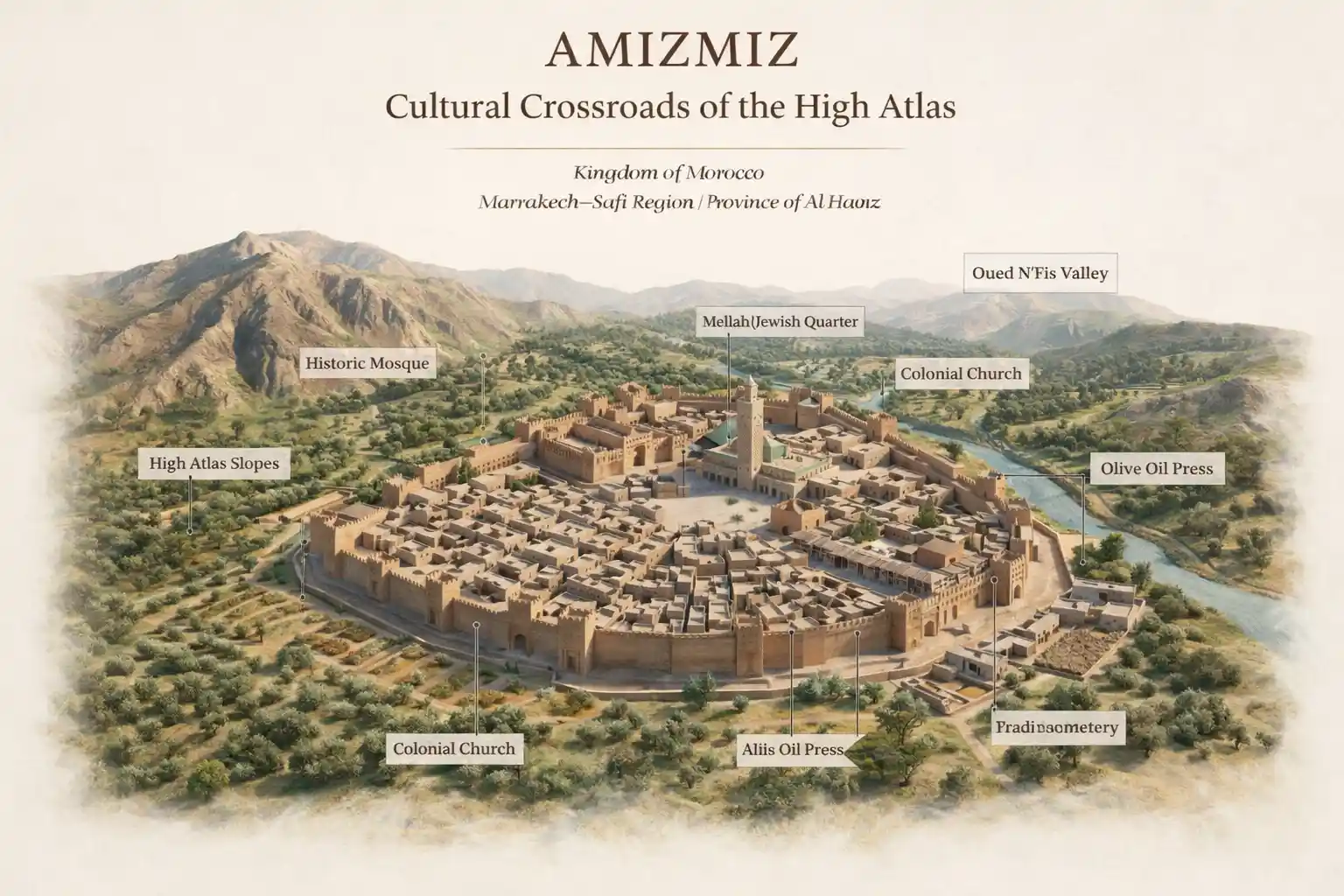
Amizmiz sits at around 1,000 meters above sea level, and the mountains behind it make that clear. The High Atlas rise dramatically from the edge of town, creating one of the most striking backdrops you will find anywhere in Morocco.
This town is a natural base for trekking into Berber villages and exploring authentic rural landscapes. The mountains are not just scenery here — they are part of daily life. Farmers, guides, and families all live in rhythm with those peaks.
If you love hiking, this is your starting point for the western approach toward the Toubkal region. And unlike busier trekking hubs, the atmosphere here is calm and genuinely local.
Oued Amizmiz— The River That Brings Life
Running alongside Amizmiz is the Oued amizmiz, and this river is the reason the town exists where it does. It feeds the olive groves, supports traditional irrigation systems, and brings the palm trees and almond orchards to life in the surrounding valley.
Walking along the river in the late afternoon, with the Atlas glowing in the background and farmers working the fields, feels like stepping into a Morocco that most visitors never see. The Oued amizmiz is not dramatic or famous — it is simply essential, and beautiful in a quiet, understated way.
Traditional Berber Architecture — Built to Last
Look at the houses in Amizmiz and you will notice something. Thick walls. Small windows. Adobe and local stone. This is not accident — it is centuries of knowledge about how to stay cool in summer and warm in winter without electricity.
The rural kasbah-style homes and village structures throughout the area reflect sustainable building traditions that Morocco’s cities are now trying to revive. Walking through the older parts of town feels like reading a textbook on vernacular architecture — except the textbook is alive and people are cooking lunch inside.
For anyone interested in cultural tourism or sustainable design, this is genuinely fascinating.
The Weekly Souk — The Real Morocco in One Place
If you can time your visit right, do not miss the Amizmiz weekly souk. This is a traditional market where livestock, handcrafted goods, local honey, olive oil, and almonds change hands the same way they have for generations.
It is loud, colorful, and completely unpretentious. Vendors come in from surrounding villages. Farmers bring their animals. Women from cooperatives sell handmade products. There is no tourist section here — just commerce, community, and a lot of mint tea.
A simple smile and a “Salam” will get you further than any guidebook. Moroccans at the souk are warm and curious, and if you show genuine interest, you will leave with stories as well as shopping.
A Town Where Three Faiths Lived Side by Side
One of the most remarkable things about Amizmiz — and one of its most overlooked landmarks — is its multi-faith heritage. The town’s historic urban map tells a layered story.
There is a traditional mosque at the center. There is a Mellah, the old Jewish quarter, where the Amazigh Jewish community once lived and traded. There is a colonial-era church and Christian cemetery, alongside a Jewish cemetery — quiet reminders of a time when three communities shared this mountain valley.
This kind of coexistence is rare, and it gives Amizmiz a historical depth that most small Moroccan towns simply do not have. For heritage travelers, researchers, and anyone interested in the human story of North Africa, these sites carry real weight.
The Olive Oil Tradition — Taste the Atlas
Amizmiz sits in olive country. The groves stretch across the valley and up the lower mountain slopes, and the tradition of olive oil production here goes back centuries. Historic olive oil press buildings are part of the town’s architectural heritage.
Some local cooperatives still produce oil the traditional way. If you get the chance to visit one — or even just to buy a bottle at the souk — do it. The flavor difference between local Atlas olive oil and anything you find in a supermarket is not subtle.
Practical Tips for Visiting Amizmiz
Getting there: The easiest way from Marrakech is a shared taxi (grand taxi). It is affordable, reliable, and a genuinely enjoyable way to watch the landscape change from city to foothills. Taxis leave from near Bab Doukkala and go when full — arrive early and be patient.
Best time to visit: Spring (March to May) is ideal. The mountains are green, the river is full, and the weather is pleasant. Autumn works well too. Summer can be warm in the valley but cool in the mountains.
Visit on souk day: Check locally for the weekly market schedule — this varies, and it is the single best reason to time your trip carefully.
Combine it with a hike: Amizmiz makes a perfect base for a one or two-day trekking excursion into nearby Berber villages. Local guides are available and knowledgeable.
Dress modestly: This is a traditional mountain town. Respectful clothing goes a long way and makes interactions with locals much warmer.
Amizmiz Is Waiting for You
The landmarks of Amizmiz are not famous. They are not polished or packaged for tourists. They are real — a river, a mountain, a souk, old olive presses, and cemeteries that hold the memory of three faiths living together in a valley beneath the Atlas.
That is exactly why Amizmiz is worth the detour.
Have you been to Amizmiz, or are you planning a visit? Have a question about getting there or what to see first? Drop it in the comments below — Hassan reads every one, and he would love to hear from you.